The Reserve Bank of India (RBI) is actively evaluating a proposal to introduce polymer banknotes into circulation, with RBI Governor Sanjay Malhotra confirming on June 5, 2026 that the matter is under consideration.
“The proposal for polymer notes is under consideration. We are evaluating the pros and cons.”
— Sanjay Malhotra, Governor, Reserve Bank of India
The development revives a decade-old idea that was first explored in 2012, when the then-UPA government conducted a limited field trial of ₹10 polymer notes in five cities.
The renewed interest is being driven by two persistent pressures: rising expenditure on currency printing and the rapid deterioration of paper notes in circulation.
India's currency printing bill has grown significantly over the past several years. The cost of security printing peaked at ₹6,372.8 crore in FY2024-25, up nearly 25% from the previous year, before easing to ₹4,875.2 crore in FY2025-26.
Despite the rapid growth of digital payments, cash in circulation continued to rise — reaching ₹41.23 trillion in value terms by end of March 2026, an increase of 11.9% year-on-year.
Currency in circulation (March 2026)
Total notes in circulation (volume)
Printing expenditure FY25-26
The proposal has reportedly been discussed at the RBI's last two board meetings, held in Patna and Mumbai, signalling serious institutional momentum behind the initiative.
Polymer banknotes are made from a thin, flexible plastic substrate — not to be confused with hard plastic cards. They remain soft, foldable, and lightweight for everyday use. Their key advantages over cotton-based paper notes are a significantly longer lifespan, greater resistance to dirt and moisture, and enhanced security features that are harder to counterfeit. When removed from circulation, polymer notes can be granulated and recycled into plastic products, reducing environmental waste.
Over 60 countries currently use polymer banknotes, including Australia (the first, since 1988), Canada, Singapore, Malaysia, and the United Kingdom.
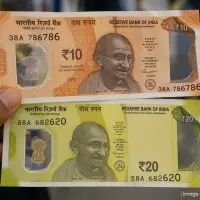
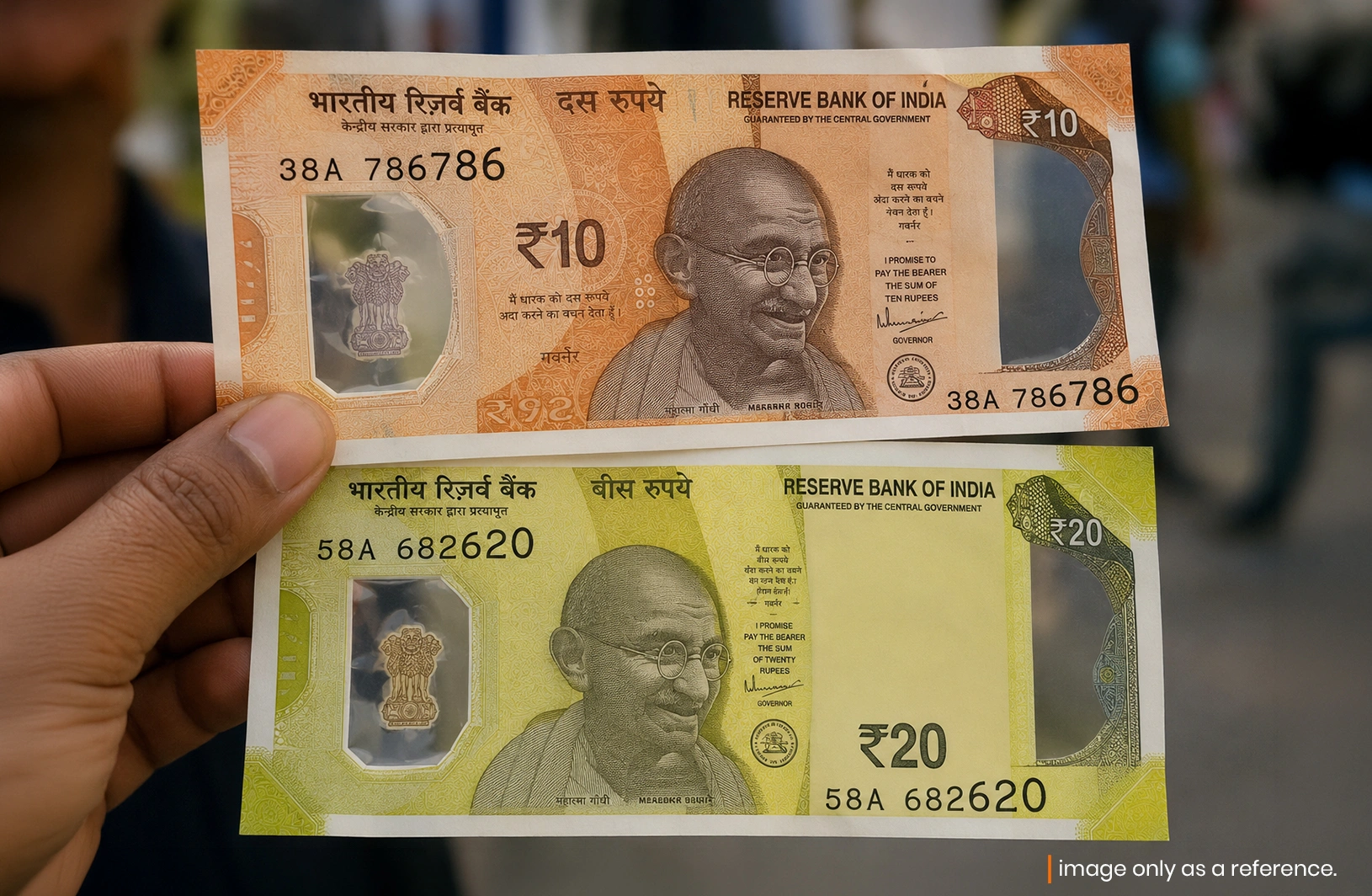
Reports indicate the RBI is likely to begin with a pilot project covering lower denominations — the ₹10 and ₹20 notes. These circulate more frequently and wear out faster than higher-value notes, making them the most practical starting point. ATM compatibility with polymer-based notes is also expected to be addressed before any wider rollout.
Sources: Business Standard , The Federal , ETV Bharat· This article is for informational purposes only.

Sharing rare finds, stories, and interesting facts from the world of currency.