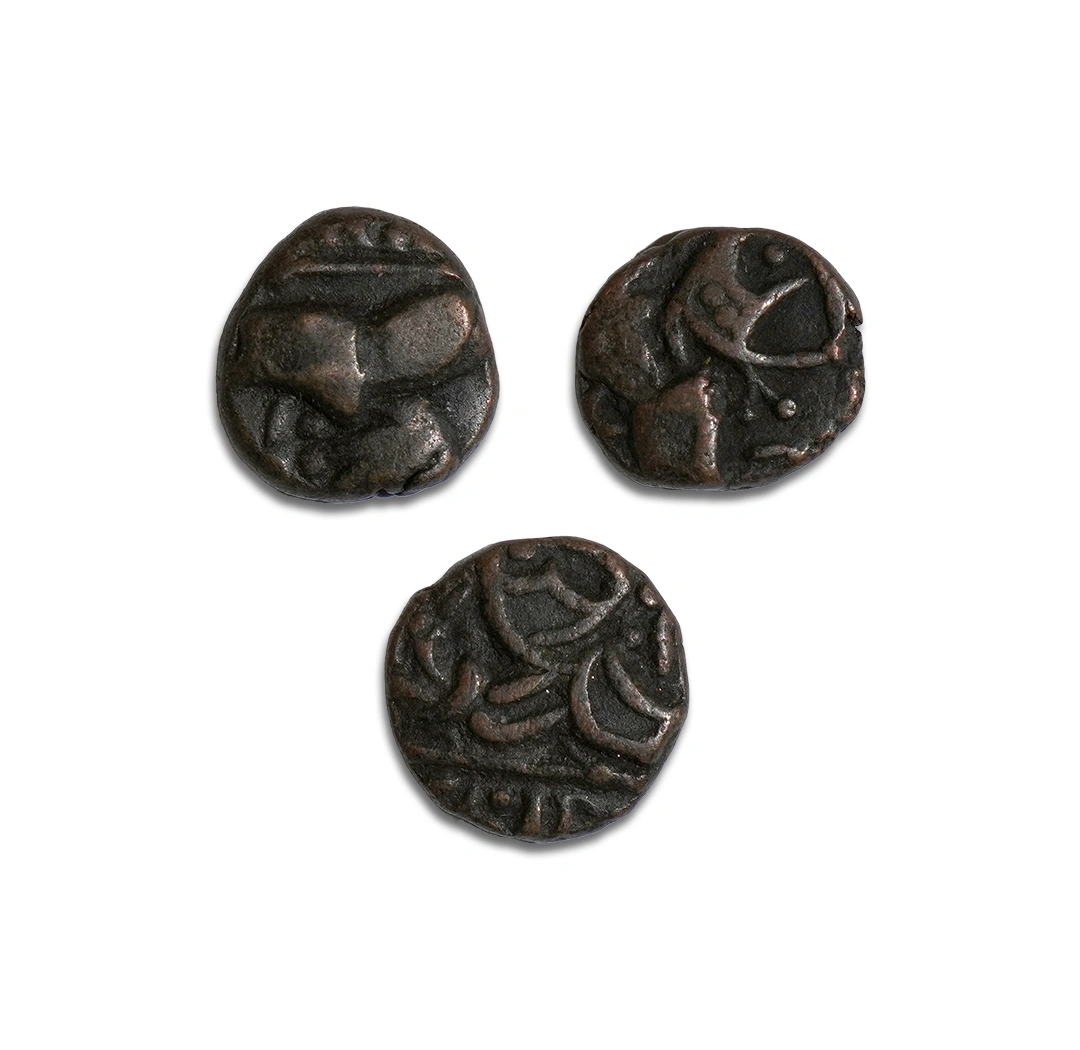
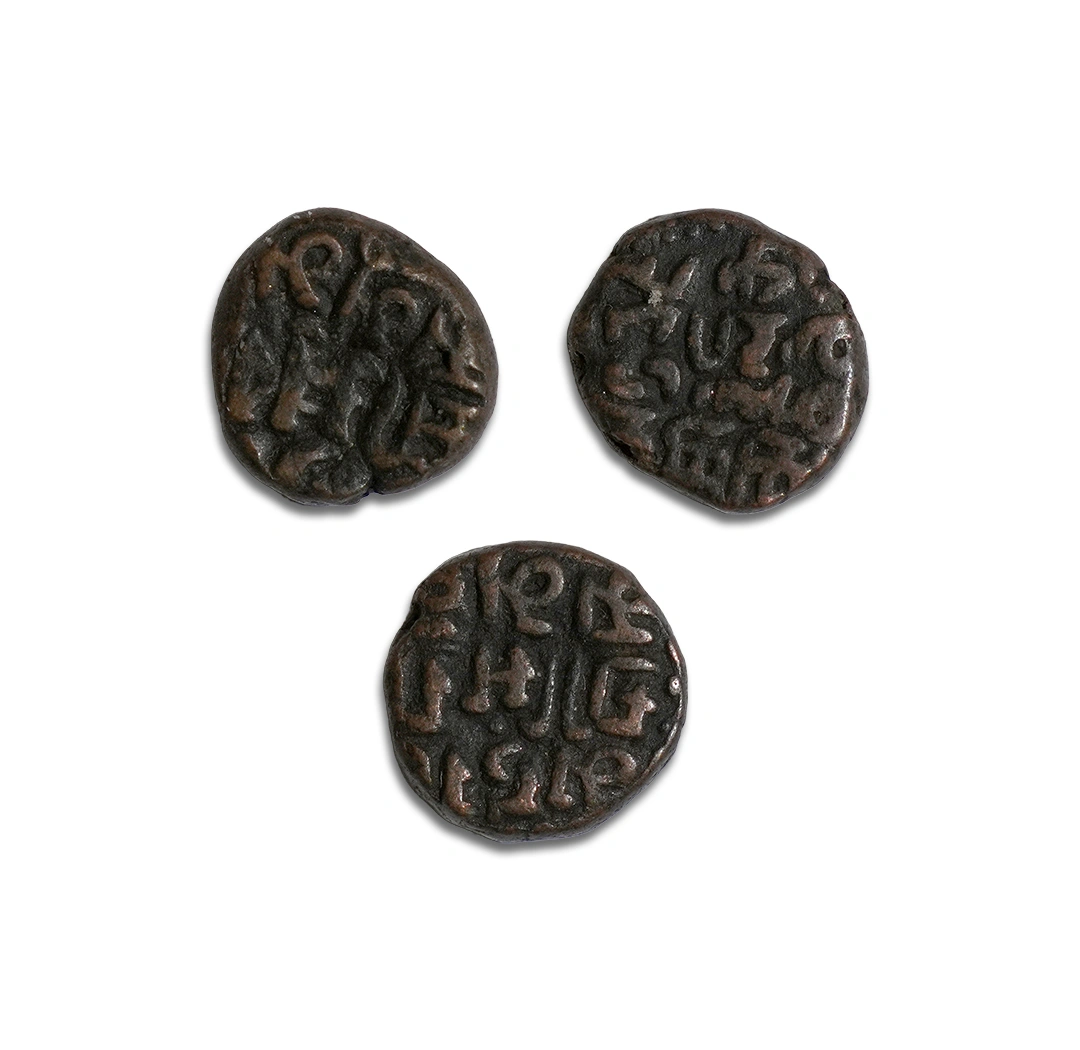
Step back into the 13th–15th centuries with this authentic numismatic collection from the Kingdom of Trigarta (modern-day Kangra, Himachal Pradesh). These copper jitals, often referred to as "Horseman" or "Bull and Horseman" type coins, were the primary currency of the rugged Himalayan foothills during a period of fierce resistance against the Delhi Sultanate and early Mughal influences.
Apurva Chandra Deva (c. 1230 / 1340–1351 AD): This coin features a stylized horseman facing right on the obverse and a clear three-line Devanagari legend on the reverse reading "Maharaja Sri Apurva Chandra Deva". It symbolizes the martial authority of the Katoch kings at their peak.
Triloka Chandra Deva II (c. 1420–1450 AD): A scarce copper unit from the 15th century. It depicts a refined horseman design, representing the consolidation of power in the Kangra Fort. The reverse bears the legend "Maharaja Sri Triloka Chandra".
Singara Chandra Deva (c. 1450–1500 AD): These later medieval jitals are known for their distinctively "crude" but historically significant imagery. They serve as a key archaeological link to a period with few surviving written chronicles.